Category Archives: Uncategorised

Is It Okay To Look Through Your Partner’s Phone?

How tempting is it to take a look at your partner’s phone?! I’d say a lot of us might take a peek if we thought we’d get away with it but some/a lot of you might disagree? What about their right to privacy? Well, as with so many things, it depends…….

Of course it’s a violation of their privacy but that line can become blurred when you have an intimate relationship with someone. Most people (not all, I know) tell a few little white lies to avoid conflict.

Some of it can be curiosity because when you see them looking at their phone you wonder, naturally, who they’re texting and if the answer isn’t particularly forthcoming, it can be irritating at best and send out alarm bells. But if you’re just a curious person and your partner knows that, they might be fine with you having a look and then you can laugh about it together.

But sometimes the desire to look at their phone is a sign of deeper issues in the relationship and if you’re looking for something amiss, you’ll probably find it, if only because texts can be misleading in their purpose and intentions.

However, if your partner has already cheated on you, it makes sense to have an agreement of complete transparency from then on if you’re going to continue together. This has to be mutually agreed but is one way of repairing the harm done. I have to add right here that if someone’s determined to cheat, they can always get another phone to text their lover but we won’t go down that road right now!

Checking their phone can be tied to issues around communication or intimacy because if problems are left in the air rather than being discussed, suspicions can mount. Sometimes it can be easier to check their phone rather than telling them how vulnerable you feel and why you feel the need to look at their phone. But although it can seem justified, it often creates more problems than it resolves.

Even if your partner hasn’t given you any reason to doubt them, you might feel insecure anyway, particularly if you’ve dated or lived with someone who cheated in the past. The betrayal will usually have stayed with you for a long time afterwards. Subconsciously, you may feel that a new partner will betray you or that they’re not really committed to you. This may not be the case at all, particularly if there’s no real evidence to suggest this.  If you don’t trust what they are telling you, in effect you’re doubting who they are and wondering whether the person they really are is reflected in the contents of their phone.

If you’re looking at their phone without their knowledge, it’s sustaining secrecy in your relationship. So, generally it’s not alright, particularly as you might find something that’s innocent but blow it up into something big. Or, instead, you might find something suggesting or even confirming that they were doing something you wouldn’t like (not necessarily having an affair but maybe doing business deals that you didn’t know about or buying things that you weren’t aware of). Of course, you’re going to be upset and it’s then become a self-fulfilling prophecy as well as being a bad way of finding out (is there ever a ‘good way’? Probably not!!).

In the end, there are no guarantees in any relationship, but going through someone’s phone shows that there’s a breakdown in communication. If you want to remedy that, ideally there needs to be an agreement that either you can both go through each other’s phones or that each of you needs some privacy even in your relationship, including keeping the contents of your phone to yourself.

When you feel threatened by your partner’s independence it’s not a healthy situation. If you have a relationship built on trust, it gives both of you room to connect with friends, family and colleagues.

Let me know what you think and whether you’ve found this blog interesting, useful or otherwise. You can see my blogs as soon as they are published (usually on Wednesdays) by pressing the ‘follow’ button and you can share them with your friends. You can also find me on Linked In, Instagram (samebutdifferent) and read my FB posts at Same But Different.

#relationships #self-esteem #trust #boundaries


Our Need For Companionship

According to an article I read online recently, a Japanese man has found a way of earning a modest living by renting himself out to people who want a companion, whether that’s because they’re lonely, bored and want someone to accompany them to a hospital appointment or, when it was possible, to a social event

Maybe you read the same article…..if so, what did you think about it?

Apparently, Shoji Morimoto, who’s 35 years old, has received thousands of requests for his services and rents himself out under the name of ‘Rental Person Who Does Nothing’. He charges about 10,000 yen which is around £70 and adds on expenses for any travel and meals. He meets clients for a chat and a drink but nothing more than that. In fact, he advertises himself as a person who can “eat and drink, and give simple feedback, but do nothing more”. As well as having 269,000 Twitter followers he’s published books, although I couldn’t find them online, but presumably they’re based around his experiences of going for a walk with clients, shopping with them or accompanying them when they have appointments with a professional.

In some ways, I’m thinking that this is a very worthwhile service, but also – it’s sad that we live in a society where people have to pay someone to alleviate their feeling of being alone. I doubt that this is confined to Japan as loneliness affects people worldwide although I suspected not so much in collectivist cultures. However, apparently that isn’t true as people don’t seem to be lonelier in societies that are traditionally labelled ‘individualistic’.  It’s common to live alone in those societies but it doesn’t always go hand in hand with loneliness. Interesting…..  see the link below for more information about this:

https://ourworldindata.org/lonely-not-alone

If you’ve spent five years or fifty years in a relationship and that person is no longer there, either because they’ve died or left, it can leave a huge hole when you’ve been used to having someone to share your life with. Even if you didn’t do a lot together and had few shared interests, that person was there physically at least. The same goes for a sibling or close friend – if they’re no longer in your life, for whatever reason, the void left can be very hard to fill Maybe you’ve decided to try to find more people to share your life with, not necessarily in a relationship, but so that there are people who provide a degree of companionship that you feel you’re missing. If so, going for a walk every day and just saying “hello” to whoever you meet along the way as well as texting someone in your family or a friend to see how they are. When restrictions ease, you could try joining a group that interests you as well.

It’s not easy to make these changes but if you try them, you may well find that you find the companionship that’s important to you.

I’d be interested to know what you think about this blog and what I’ve written so do comment if you’d like to do so.

You can read my blogs as soon as they are published (usually on Wednesdays) by pressing the ‘follow’ button and you can share them with your friends. You can also find me on Linked In, Instagram (samebutdifferent) and read my FB posts at Same But Different.

Companionship

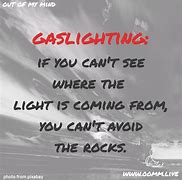
Gaslighting – What Is It?

The original classic 1944 film

I wrote about this three years ago and since then I’ve noticed that it’s become quite a mainstream topic, with magazines publishing articles about it now. I wrote about it originally because I became aware that someone I knew was gaslighting me and I realised then how difficult it can be to deal with.

First of all though, if you’re in any doubt about where it comes from, gaslighting is a term that comes of the 1944 film Gaslight where a husband tried to convince his wife that she is going insane and eventually causes her to question herself and her whole life.

In a milder form, it’s now become a more focal term in counselling and psychotherapy and is usually to do with power and control in a relationship which can be from a partner, family member or work colleague. It is arguable that the ‘gaslighter’ (the one who perpetrates this situation) is also a narcissist but for the purpose of this blog I’m going to look at how the gaslighter often behaves; if you’re a victim of this type of manipulation, I also show how you can deal with it which is how I dealt with it when it happened to me, once I recognised it for what it was.

It usually goes like this:

  • The gaslighter creates a narrative about the gaslightee which suggests that there’s something wrong and inadequate about them. This might be along the lines of “why do you always do that/say this – it’s unnecessary”. This can make the other person start to question themselves.
  • Repetition – this type of conversation is repeated over and over again, sometimes in front of other people but more often when the target is alone with the gaslighter. This is a big
  • Escalation – if questioned, the gaslighter refutes evidence and attempts to make their lies and exaggerations look reasonable.
  • Wearing down the victim – often the gaslighter wears down the victim who becomes fearful, self-doubting, resigned and pessimistic.
  • The gaslighter appears to have the power – they will grant acceptance, respect and approval only if it suits them to do so (often in front of other people).
  • They will occasionally give false hope – they will treat the victim with superficial kindness so that the victim thinks ‘maybe things will get better now’.
  • They use people close to you as ammunition – one of the things that they use will be people that you’re close to, whom they’ll try to get onside in their subtle attacks on you.

So what can you do about it if you feel that you are the victim of a gaslighter?

  • First of all, don’t take the bait and when you feel that they’re trying to undermine you, don’t fall into the trap of questioning yourself about what’s happened.
  • Set some boundaries for yourself and them – you don’t have to answer all their questions if you find them intrusive and you can walk away if you want to.
  • Keep your life as personal as possible – they’ll want to know every detail if you let them. Make sure that your journals and phone are out of their reach so that they can’t pry.
  • Don’t introduce your friends to them – they’ll probably charm them and make you out to be the weird one. If you’re part of the same friendship group, keep your thoughts about the gaslighter to yourself unless you have absolute proof of what they’re doing.
    Don’t argue or discuss personal things with them – they have to ‘win’ at all costs.
  • Walk away as much as possible – you can say ‘no’ and not engage in every conversation that the gaslighter wants to have with you.

If you feel that you’re the victim of a gaslighter and are finding it hard to cope, counselling may well be of help in this situation, or talk to a trusted friend – sharing your fears can really help, but only if you know that they’re not going to influenced in any way by the person who’s gaslighting you.

Please do comment on my blog if you have found it interesting, useful or otherwise. You can see my blogs as soon as they are published (usually on Wednesdays) by pressing the ‘follow’ button and you can share them with your friends. You can also find me on Linked In, Instagram (samebutdifferent) and read my FB posts at Same But Different.

Think You Might Be Suffering From Seasonal Affective Disorder?

Now that we’re into 2021 and the initial enthusiasm of New Year resolutions (if you made any) has started to wear off, many people are filled with dread.Why? –  because they know that their symptoms of Seasonal Affective Disorder, or SAD (sometimes called “Winter Blues”) will really kick in, if they didn’t start in November when the clocks went back.

If you hate the long winter evenings, feel exhausted, depressed and anxious and feel that hibernation would be preferable, you could be a sufferer.  Most of us are affected to some extent by the changes in light, as well as craving stodgier comfort foods but for some people the longer, dark nights have far more of an effect.

For these people, feeling very low in mood, having negative thoughts and feelings also resul in a loss of self-esteem. Rather than just feel lethargic, they feel extreme fatigue to such an extent that they have an almost irresistible urge to sleep for several hours during the day. Their feelings of tension increase and their ability to deal with stress decreases.

Other symptoms may include increased irritability and a reduced interest in sex and physical contact.

SAD can begin at any age and may be triggered by other factors such as a change in environment, childbirth or illness. It occurs throughout the northern and southern hemispheres but is rare within 30 degrees of the equator.

The theory is that lack of sunlight may stop a part of the brain called the hypothalamus working properly which may affect the production of melatonin (a hormone that makes you feel sleepy; in people with SAD, the body may produce it in higher levels); the production of serotonin which is another hormone that affects your mood, appetite and sleep; a lack of sunlight may lead to lower serotonin levels; when the hypothalamus isn’t working properly it also affects the body’s internal clock (circadian rhythm) and this impacts on various functions such as when you wake up. The lower light levels in winter may disrupt your body clock and lead to the symptoms above.

Most sufferers find that their symptoms improve and then disappear during the spring and summer, only to return again in the autumn and winter in a repetitive pattern. It may be that some people are more susceptible than others to SAD.

If you find that you’re experiencing the above symptoms, you should consider seeing your GP if you’re struggling to cope. You may be asked about your lifestyle, eating and sleeping patterns, and any change in mood or behaviour. Your GP will then recommend the most suitable treatment option for you, based on the nature and severity of your symptoms. A combination of treatments may be used to get the best results.

A number of treatments are available for SAD including cognitive behavioural therapy, antidepressants, lifestyle measures and light therapy.

  • Cognitive behavioural therapy (CBT) has been found to be helpful in treating SAD symptoms. CBT is based on the idea that we way we think and behave affects the way we feel. Changing the way you think about situations and what you can do about them can help you to feel better.
  • Antidepressant medication may be prescribed – these are usually selective serotonin re-uptake inhibitors (SSRIs).
  • Lifestyle measures such as getting as much natural sunlight as possible (a short walk at lunchtime can help), managing stress and exercising regularly may well be helpful.
  • Light therapy – a special lamp called a light box is used to simulate exposure to sunlight. This involves sitting by a special lamp called a light box, usually for around 30 minutes each morning. The Seasonal Affective Disorder Association (SADA) have specific guidelines for light boxes which may help. The recommended light boxes have filters to remove harmful ultraviolet rays.

The things that you can try for yourself include the lifestyle measures above, making your work and home environments as light and airy as possible as well as sitting near windows when you’re indoors. Eat a balanced diet, even though it’s tempting to eat a lot of carbohydrates.

By recognising the symptoms associated with SAD it is possible to then access treatment and hopefully this will help to alleviate the worst effects so that you can look forward to the remaining winter months without trepidation.

Please do comment on my blog if you have found it interesting, useful or otherwise. You can see my blogs as soon as they are published (usually on Wednesdays) by pressing the ‘follow’ button and you can share them with your friends. You can also find me on Linked In, Instagram (samebutdifferent) and read my FB posts at Same But Different.

Wishing You A Very Happy Christmas

I wish every one of you a happy Christmas – thank you for reading my blogs and for those of you who also comment, I really appreciate it.

Whatever Christmas means for you, if it hasn’t worked out as you’d hoped, I hope that you can still enjoy whatever pleasures the day brings and go forward with renewed hope for the future.

Keep reading and if you want me to write a blog about a particular subject, please let me know! I’m always looking for new, relevant ideas.